
Trace Jefferson County Former Owners
Build the chain one transfer at a time. Start from the most recent conveyance you can confirm. The Doxpop Recorder index reaches back to January 1, 1993 for Jefferson County. Party names, dates, document types, legal descriptions, and recording numbers all appear in each entry. Those details let you separate people who share a surname. Treat the result as a working chain format, not proof about a real parcel.
| Transfer Date | Grantor to Grantee | Deed Type | Book/Page |
|---|---|---|---|
| Newest filing | Seller A to Buyer B | Warranty deed | Copy the exact index reference |
| Earlier filing | Seller C to Buyer A | Quitclaim deed | Copy the exact index reference |
| Older volume | Seller D to Buyer C | Deed | Book and page from reverse index |
Every row needs a searched source behind it. Note the retrieval date, name variants, coverage cutoff, and any legal terms involved. Flag images that would not open. A shared surname proves nothing.
Jefferson County's 1993 Deed Divide
Online coverage starts in 1993, not at the birth of county land records. Jefferson County formed in 1811, and the Recorder keeps instruments permanently. When your chain crosses that digital cutoff, the work moves to the courthouse counter. Other options include bound deed books or library microfilm. The Indiana State Library inventory lists Jefferson land deeds from 1811 through 1900. It also holds multiple grantor and grantee indexes. Confirm the current reel or item before ordering. Low-volume Doxpop searching and viewing are free, while downloads and heavy use can cost more.
Online limit. Records before January 1, 1993 require an office, deed-book, microfilm, library, or archive search.
Maps Place Jefferson County Prior Owners
A 1900 county map and the 1929 Hixson plat book capture earlier landowner geography. Deeds often cite township, section, range, subdivision, lot, or block instead of a modern address. These sources help you locate that land. They add context, though they never replace a recorded conveyance. Madison was settled in 1809, before the county existed. The earliest land may sit in predecessor Dearborn or Clark County records. Street names and rural postal labels also changed over time. Carry legal descriptions and adjoining owners forward as clues.
Reconstruct Jefferson County Owners Backward
Work the chain in reverse. Take the current grantee named in the newest confirmed deed. That filing identifies the grantor, and that grantor becomes your next search subject.
- Save the newest deed's date, parties, type, recording number, and legal description.
- Search its grantor as an earlier grantee, using spelling variants and a date before the sale.
- Compare lot, block, acreage, section, township, range, and prior-instrument references.
- Repeat until 1993, then continue in deed books or microfilm and state each gap.
- Grantor
- The party transferring an interest.
- Grantee
- The party receiving that interest.
- Chain of title
- The linked sequence of recorded transfers.
- Reverse index
- An index used to find a deed through one side of a transfer.
- Quitclaim deed
- A deed conveying the grantor's interest without warranty-deed promises.
Search Jefferson County Previous Owners
Doxpop accepts names in either order, and the county suggests trying nicknames and common misspellings. Run grantor and grantee searches separately. A broad result can be trimmed. Use dates, deed type, document number, or legal terms to narrow it. Open the official Jefferson County deed search before tracing prior owners.
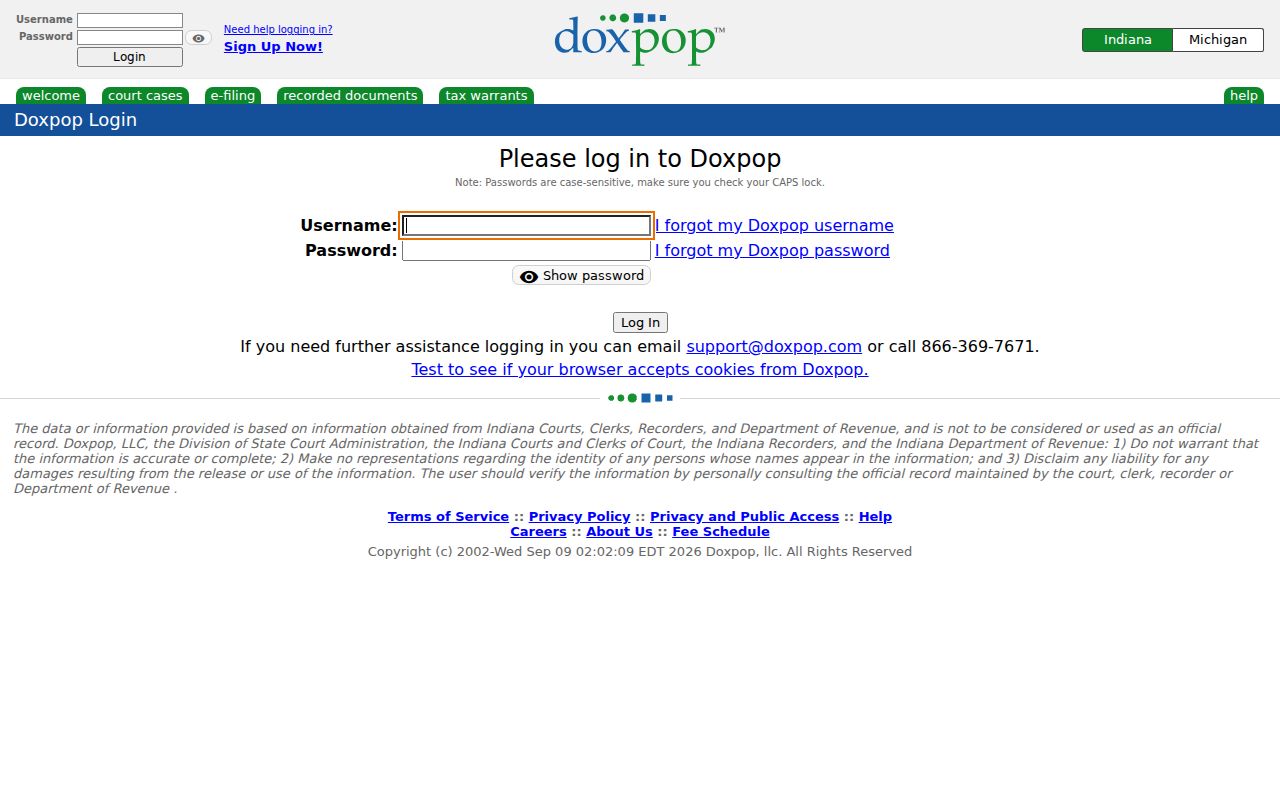
The official index page is an entry point, nothing more. A valid chain still hinges on tying every document to the same land.
Estates Alter Jefferson County Chains
Not every owner leaves through an ordinary sale. Death, trusts, and court orders break the simple sequence. Search MyCase and the Jefferson Circuit or Superior Clerk for an estate, will, personal representative, or sale petition. Then return to Doxpop for a representative deed, affidavit, transfer-on-death filing, or later conveyance. Probate microfilm spans 1811 through 1940, and will holdings follow several date runs. A docket alone never proves title. The estate event must connect to a recorded land instrument before it counts.
Jefferson County Former Owner Clues
City directories place a person at an address. They usually show occupancy rather than title. The Madison-Jefferson County Public Library lists Madison editions from 1867 through 2022, with gaps. Use directories and newspapers to resolve name or address changes. Then go back to the deeds. Plats, surveys, releases, assignments, and corrective deeds matter too. Oversized plats and surveys may not download like ordinary pages. Request them from the Recorder by recording number.
Jefferson County Deed Number Eras
Document numbers shifted format across the online era. Records from 1993 through 1997 may carry four digits. In 1998 and 1999, the format used a two-digit year prefix with six digits overall. From 2000 through 2003 it became a four-digit year prefix with eight digits, and 2004 forward generally shows nine digits behind a four-digit year. Those patterns help when a citation has lost punctuation or leading zeros. They are index aids only, never legal rules for the document. Copy each number exactly as the live result displays it, and pair it with the recording date, parties, type, and legal description.
Look past deeds alone when a link seems missing. The Recorder files affidavits, assignments, annexations, cemetery deeds, condominium instruments, real-estate contracts, powers of attorney, trustee elections, releases, surveys, and plats. A corrective instrument can fix a name. It can also repair a legal description without resembling a sale at all. A release or assignment may explain later references, but it creates no new owner. Keep each instrument's role distinct in your chain notes.
Request Jefferson County Older Deeds
The Recorder sits in Room 104 at 300 E Main Street in Madison, and the office line is 812-265-8903, open weekdays from 8 a.m. to 4 p.m. Requesting an older chain goes smoother with details. Give grantor and grantee names, rough dates, deed type, legal description, subdivision, lot and block, the parcel number, and any book or page already known. Say whether inspection, a plain image, or a certified copy is wanted.
A chain that crosses both eras needs a clear scope. That means Doxpop coverage from 1993 forward, plus the pre-1993 books or microfilm. Listing excluded categories works better than implying every instrument came under review. Indiana APRA allows inspection and copying of existing public records, subject to lawful exemptions and office procedures. It does not obligate staff to build a title analysis.
A house-history packet earns its keep on land clues. Capture the county, township, section, range, subdivision, addition, lot, block, and acreage from each deed. Keep the prior-instrument citation too. These details bridge changes in owner spelling and street labels. Early instruments may rely on survey calls rather than an address. If the chain seems to jump, search both sides of the likely date window. Check affidavits, estate filings, and corrective deeds. Two parcels under one old name stay two parcels. Each legal description must trace its own sequence.
Historic sources answer narrower questions. A plat can show how a tract became numbered lots, a directory can suggest who used an address in a given year, and a probate file can explain the authority behind a transfer. None replaces the deed itself, so label each fact by source and keep a recorded owner distinct from a directory or newspaper occupant.
State Jefferson County History Limits
A former-owners report should name its limits precisely. List every system, date, name, and document type searched. Write "no result in Doxpop from 1993 through the retrieval date," never simply "no deed," since index errors, unrecorded interests, probate gaps, and missing images can all hide transfers.
History, not a title opinion. Use prior-owner records for house history and lawful property work, never to track or harass a living person.
Call 812-265-8903 first. The Recorder in Room 104, 300 E Main Street, Madison, keeps listed weekday hours and can help when you provide parties, dates, deed type, parcel, and legal description. Hard title questions need an Indiana attorney or title company.